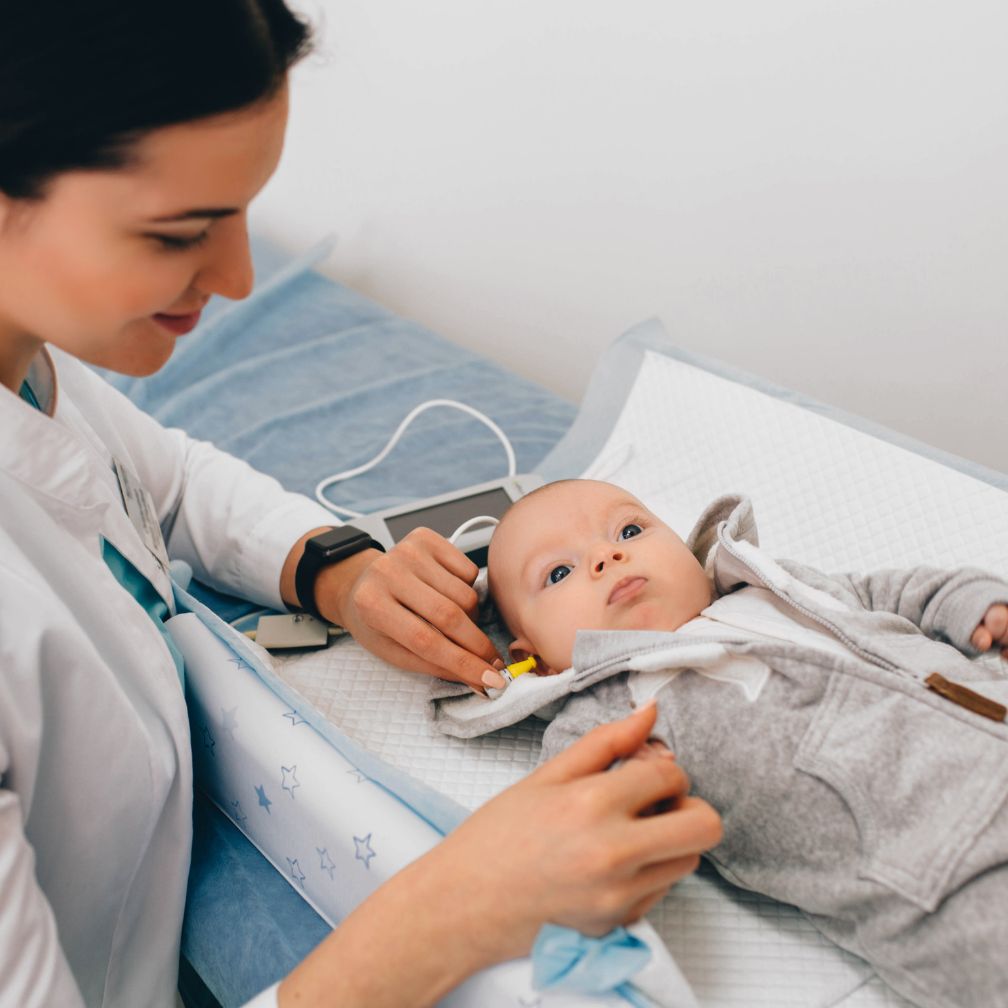
For mothers and fathers with newborns, discovering their infant faces auditory loss will feel overwhelming and disheartening. Yet the positive perspective remains that via early care and screening, infants experiencing hearing loss are able to thrive over time. Beyond question, such babies can gain verbal communication, expressive ability, and strong bonds within their surroundings, ensuring a bright, enriched future!
Combining traditional hearing devices with specialized cochlear technology offers two primary clinical solutions for helping infants who exhibit hearing loss. Further down, our article reviews their key operational details so you can select the proper choice for your baby.
Analyzing Infant Auditory Deficits
Congenital auditory impairment in infants often occurs because of various root causes, such as:
- Key inherited genetic traits (even if family records show no precedent)
- Direct congenital pathogen exposures such as cytomegalovirus (CMV) and rubella
- Significant obstetric complications, featuring systemic oxygen lack or low birth weight
- Specific clinical medications given during neonatal intensive care
Which effort carries the greatest weight? Immediate objective assessment. For this reason, infants throughout the United States complete systematic hearing checks before leaving the hospital. Trained pediatric hearing clinicians advocate for the established “1-3-6” intervention timeline:
- Initial hearing check administered within 30 days of birth
- Official medical diagnosis secured prior to 3 months of age
- Prompt intervention (employing amplification units or structured therapy) initiated within 6 months
Meeting these core timeline goals secures for infants their highest probability for superior speech, verbal communication, and brain maturation. If you want guidance on these diagnostic stages, your trusted pediatrician will eagerly guide you!
Deploying Hearing Aids for Newborns
In infants identified with mild to severe auditory loss, electronic hearing aids typically represent the preferred starting point. Such compact, fitted instruments increase acoustic volume, enabling babies to process spoken dialogue and surrounding noise with greater accuracy.
Current pediatric hearing aids function as:
- Fully safe for clinical use in babies aged just a few weeks
- Constructed using pliable, soft ergonomic molds that change as the child grows
- Outfitted with secure, tamper-resistant battery latches and child-focused protective mechanisms
- Precisely adjusted by a trained pediatric hearing practitioner to match your child’s exact hearing needs
As your child matures, hearing devices require routine recalibration to guarantee physical comfort and optimal performance.
Cochlear Implant Options for Newborns
In instances where an infant demonstrates severe to profound sensorineural hearing loss and gets limited benefit from wearable aids, audiology teams frequently suggest a cochlear implant. In direct contrast to standard hearing aids, cochlear implant systems:
- Must be surgically installed during a specialized medical procedure
- Successfully bypass non-working components inside the cochlear pathway
- Convert environmental sound into digital electrical signals that stimulate the acoustic nerve directly
Surgically fitted cochlear implants serve as:
- Fully FDA-approved for babies as young as 9-12 months of age
- Profoundly successful whenever integrated with comprehensive speech therapy and robust family support
- Prescribed solely following a rigorous evaluation process by a certified audiologist and otolaryngologist
Such a comprehensive process requires radiological imaging, detailed hearing tests, and setting realistic expectations for future communicative success.
Hearing Aids vs. Cochlear Implants: What’s the Difference?
- Mild to severe hearing loss targets Hearing Aids; Severe to profound levels of loss demand Cochlear Implants
- Non-Invasive wearable application: Hearing Aids; Invasive surgical placement: Cochlear Implants
- Standard sound amplification logic: Hearing Aids; Electrical signal stream conversion: Cochlear Implants
- Treatment starts in newborn infancy: Hearing Aids; Procedure starts at 9-12 months: Cochlear Implants
Summary Thoughts: Supporting Your Child’s Hearing Journey
Should your baby receive a formal hearing loss diagnosis, you possess multiple viable options and dedicated expert support. With active assistance from pediatric hearing professionals, most children construct communication skills that mirror those of their age group.
Irrespective of whether your child receives fitting for hearing aids or surgery for cochlear devices, early management establishes a foundation for lifelong communicative success.
Are you looking for clarity regarding your infant’s hearing development? Call our clinic today to receive a complete diagnostic assessment and personalized rehabilitation plan.
