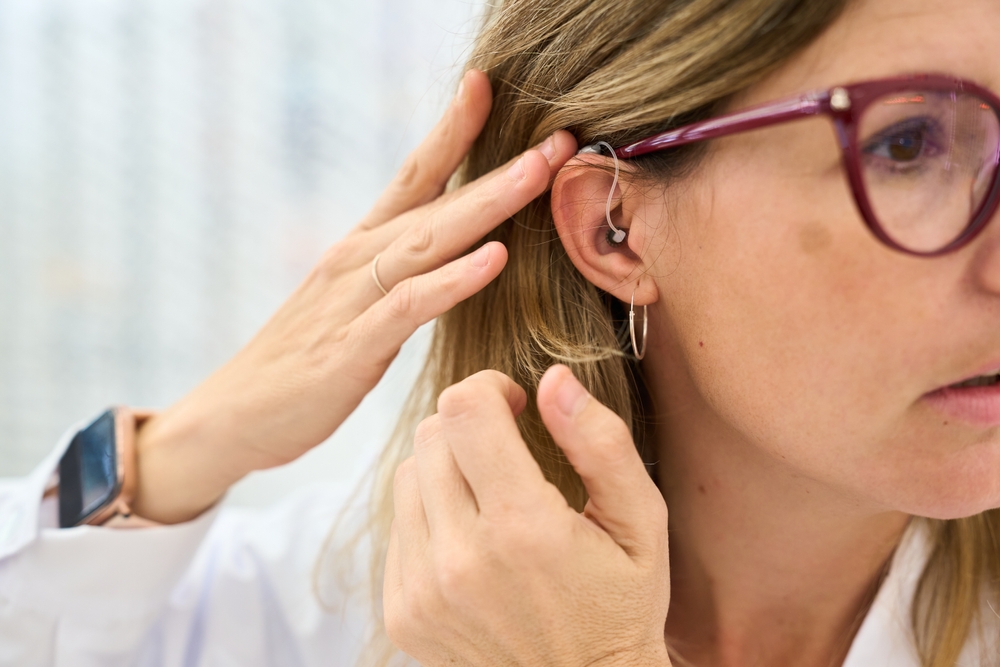
It is incredibly common for individuals to resist getting hearing instruments simply because they dread a bulky appearance or an uncomfortable fit. This hesitation is entirely valid given historical product designs! Regrettably, some people even experienced social alienation because acquaintances falsely assumed that wearing a visible aid signaled a complete inability to comprehend spoken dialogue.
For many people, this image has stuck, making them hesitant to take the next step. But the reality is that today’s modern hearing aids look and feel very different from what you might expect. Advances in design and technology have made them smaller, more comfortable, and far more discreet.
If cosmetic anxiety has caused you to delay treating your hearing loss, it is highly recommended that you evaluate the sophisticated options now available.
Why the Bulky, Obvious Hearing Aid Is a Thing of the Past
When asked to visualize a hearing instrument, the average person still envisions an awkward, highly conspicuous piece of hardware visible from yards away. Should that be your current expectation, you are inadvertently recalling the clunky designs common to the 1980s and 1990s.
Since then, the entire category has evolved. Continuous refinements in ergonomic styling, nanometer-scale circuitry, and digital audio engineering have radically overhauled the modern cosmetic profile. Current product lines are incredibly compact, architecturally clean, and purpose-built to harmonize with your features or sit entirely out of sight.
A multitude of current designs fit entirely inside the physical ear canal, ensuring they remain hidden from view during normal social encounters. Alternative styles occupy a tiny footprint behind the pinna, utilizing ultra-light materials and customizable color palettes to match hair or skin tones perfectly.
Primary Hearing Aid Styles, From Invisible to Barely There
If you’re wondering what your main options in hearing aids actually look like, here’s a simple breakdown:
The Invisible-in-Canal (IIC) Form Factor
For total subtlety, these instruments have no medical equal. The IIC style fits exclusively within the deep internal canal and is built using a custom impression of the patient’s ear passagographic anatomy. During typical face-to-face communication, these custom models remain completely obscured from view. They remain an exceptionally sought-after solution for patients with mild-to-moderate deficits who refuse to compromise on cosmetic privacy.
Receiver-in-Canal (RIC) and Receiver-in-the-Ear (RITE) Designs
This architecture stands as the most frequently prescribed configuration in modern clinical practice. A microscopic electronic hub is positioned behind the outer ear, anchored by an ultra-thin, transparent lead to a high-fidelity speaker seated inside the canal. From an aesthetic standpoint, they look very similar to trendy consumer tech or modern bluetooth monitors. The vast majority of peers will fail to perceive the apparatus unless conducting a highly deliberate close-up inspection.
Streamlined Behind-the-Ear (BTE) Systems
While these models house all electronic components within a casing resting behind the pinna, their dimensions are drastically reduced compared to legacy models. They’re often recommended for more significant hearing loss and offer excellent performance without the bulky appearance people expect.
The fundamental lesson is clear: current acoustic technology is engineered to integrate seamlessly into your personal lifestyle, never to advertise an impairment.
How Current Hearing Technology Outperforms Traditional Amplifiers
It is vital to recognize that this technological revolution is not simply a visual upgrade. Present-day models perform like advanced personal audio computers instead of basic medical listening aids. Many variants integrate high-speed Bluetooth protocols, allowing you to route phone calls, podcasts, or multimedia audio straight to your ears without external headphones.
Managed via intuitive phone interfaces, these systems give you the power to mix sound levels or change situational profiles without ever touching your ears. For instance, when entering a highly reverberant dining space, you can suppress ambient acoustic noise and sharpen speech clarity in mere moments. Rechargeable batteries have also replaced the tiny ones people used to struggle with. The process is as simple as placing the units into their charging dock each night, identical to charging your cell phone.
Dismantling the Emotional Stigma of Auditory Assistance
Despite understanding these technological quantum leaps, psychological resistance remains highly common. Initiating an auditory health journey can feel emotionally taxing because it requires acknowledging that our physical baseline has shifted over time. This can make us feel helpless and like we aren’t fully in control of what’s happening to our bodies.
But here’s a different way to look at it: Hearing aids aren’t a sign that something has gone wrong. They are merely an intelligent adaptation to a universal milestone of aging that impacts us all eventually. They’re proof that you’re taking action to support and equip your body in essential ways.
Consider the profound joy of wearing a tiny, unnoticeable device that lets you confidently command group discussions, master noisy environments, and immerse yourself in what matters most. This is the definition of true personal empowerment!
See For Yourself What Today’s Hearing Aids Look Like
The quickest way to erase your grandfather’s mental model is to physically interact with twenty-first-century hearing tech. Our clinical team cordially invites you to visit our facility, interview our staff, and evaluate different form factors in a stress-free, zero-obligation environment. Treat this as a risk-free exploratory step to comprehend the incredible aesthetic shift that has occurred in our field.
Almost every visitor walks out completely shocked by how weightless, ergonomic, and cosmetically invisible these tools are in practice! Please contact our patient care coordinators or utilize our digital portal to secure your consultation this week.
