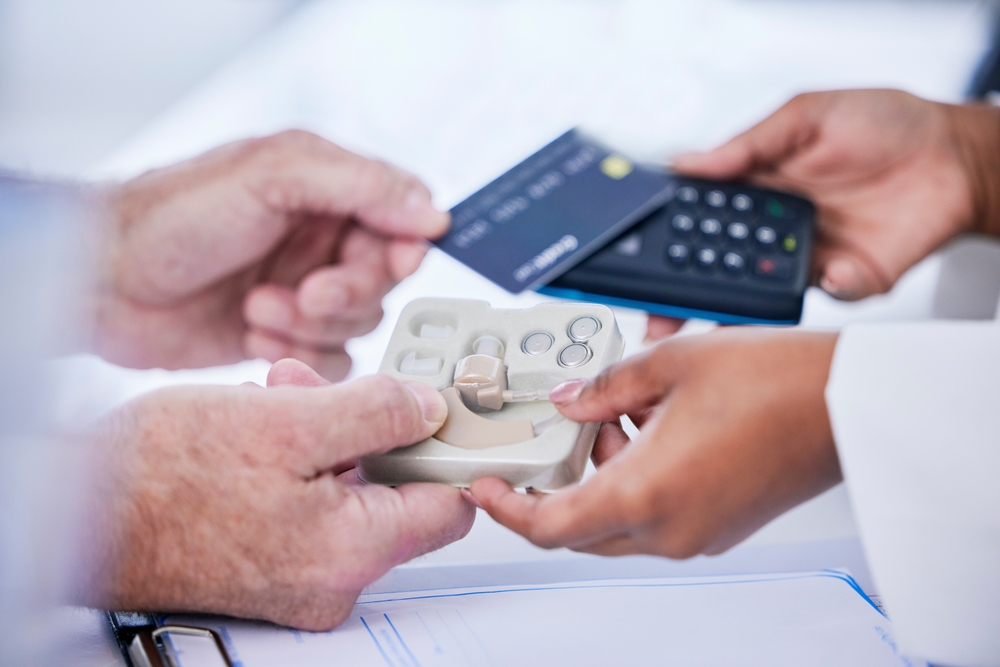
If you’ve looked into hearing aids, one of the first things you’ve probably noticed is the price. The total investment fluctuates significantly based on the specific acoustic gain features and the level of personalized audiology care included. For many patients, this sudden realization can cause hesitation and create an artificial barrier to necessary intervention.
The sticker price is a real metric, yet it rarely reflects the actual net expenditure for the patient. A high percentage of candidates remain unaware that retail pricing is seldom the final out-of-pocket obligation. Through the strategic use of indemnity policies, dedicated health accounts, and flexible payment timelines, the acquisition process becomes highly manageable.
This clinical brief outlines primary procurement strategies to educate you prior to your diagnostic evaluation, ensuring a confident approach to auditory rehabilitation.
Maximizing Private and Employer Insurance Benefits for Acoustic Devices
Initial financial due diligence should always begin with an evaluation of your current insurance portfolio.
Under private healthcare frameworks, the scope of coverage for speech-preservation technology is subject to extreme variation. Some plans cover a portion, while others offer a fixed allowance. In contrast, certain insurance products offer zero provision for auditory assistive devices. To find out more, call the number on your insurance card and ask about hearing aid benefits. Ensure you document any maximum limits, whether diagnostic programming sessions are bundled, and which audiology practices hold in-network status.
If you’re on Medicare, it’s important to know that Original Medicare (Parts A and B) does not cover hearing aids. Conversely, privately administered Medicare Advantage options frequently offer hearing-specific stipends as a core incentive.
For low-income individuals on Medicaid, regional state guidelines dictate the scope of available hearing care. Some programs provide hearing aid benefits for qualifying adults, so it’s worth checking or asking your provider for guidance.
Maximizing Health Savings and Flexible Spending Accounts for Otologic Technology
Possessing an HSA or an FSA equips the patient with a highly efficient asset for absorbing device costs.
Hearing aids are a qualified medical expense, which means you can use pre-tax dollars to cover the cost. Utilizing this financial pathway yields substantial savings that alter the economic equation. As a case in point, combining a $2,000 equipment cost with a 22% tax bracket yields a net savings of several hundred dollars. Crucially, HSA balances carry over across fiscal periods, whereas FSA assets generally operate on a strict annual expiration schedule. Consequently, tactical deployment of seasonal FSA allocations prior to their structural expiration is highly recommended! Both prescription and many over-the-counter hearing aids qualify, so it’s worth checking your balance before your appointment.
Utilizing Patient Financing Programs to Defer Auditory Technology Costs
To avoid a single large capital outflow, medical practices frequently offer specialized patient installment plans. These specific arrangements, often administered via platforms such as CareCredit, frequently feature promotional interest-free windows. Consequently, patients are empowered to select the appropriate level of technological sophistication rather than compromising on their clinical needs.
Addressing installment options is a commonplace component of the overall treatment plan development. If budgetary constraints are a factor in your decision-making, ensure you communicate this to your provider. Keep in mind that these diverse consumer pathways were developed to address these precise medical realities! And it because people shouldn’t have to put a huge strain on their finances just to be able to care for their health, including their hearing.
Comprehensive Hearing Aid Support and Access for Eligible Military Veterans
With hearing deficits ranking as a primary consequence of military service, the VA delivers comprehensive support mechanisms for veterans.
Veterans meeting specific enrollment criteria can procure advanced prescription amplification devices entirely through VA medical benefits. Regardless of whether your auditory deficit is directly tied to your service record, your general enrollment status can open these pathways. If you haven’t explored your VA benefits yet, it’s worth reaching out to your local VA facility or asking your provider for help navigating the process.
Exploring Philanthropic and Non-Profit Foundations for Auditory Assistance
A variety of secular charities and regional foundations are dedicated to subsidizing the cost of necessary amplification. Distinguished institutions, including the Starkey Hearing Foundation alongside local Lions Clubs, manage device donation programs. Furthermore, a number of municipal and state agencies sponsor dedicated initiatives for economically disadvantaged adults.
Though administrative processing times and qualification reviews apply, these non-profit options provide crucial lifelines for the under-insured. You can check online with most of these organizations to see if you qualify, or at least get the conversation started.
Evaluating the Clinical Role and Financial Impact of OTC Hearing Devices
Positioned as a budget-conscious retail category, OTC systems generally command a retail price from $200 to $1,000 per set. This retail equipment is specifically engineered to address uncomplicated, mild-to-moderate sensory changes in mature populations.
However, omitting an individualized audiometric diagnostic fitting frequently leads to suboptimal user satisfaction and poor device retention. For individuals demonstrating pronounced or complex sensory deficits, physician-fitted clinical devices consistently yield superior acoustic gain stability.
Rather than purchasing an OTC model out of economic necessity, investing in a professional evaluation establishes your true baseline needs. Retail devices function adequately as a temporary placeholder while awaiting insurance pre-authorization or institutional grant approvals. They’re better than nothing and offer a decent temporary fix, but they’re not ideal for the long term.
A Collaborative Approach to Affordable Hearing Care and Device Selection
Our administrative staff is deeply experienced in aligning technological needs with realistic financial solutions for our community. There are often more options than people expect.
Provide your health insurance credentials at your intake visit, allowing us to audit your benefits and maximize your available financial credits. Contact our scheduling desk today or utilize our digital portal to book your comprehensive diagnostic audiology appointment. We’re happy to help you find a solution for hearing aid costs that feels manageable.
