
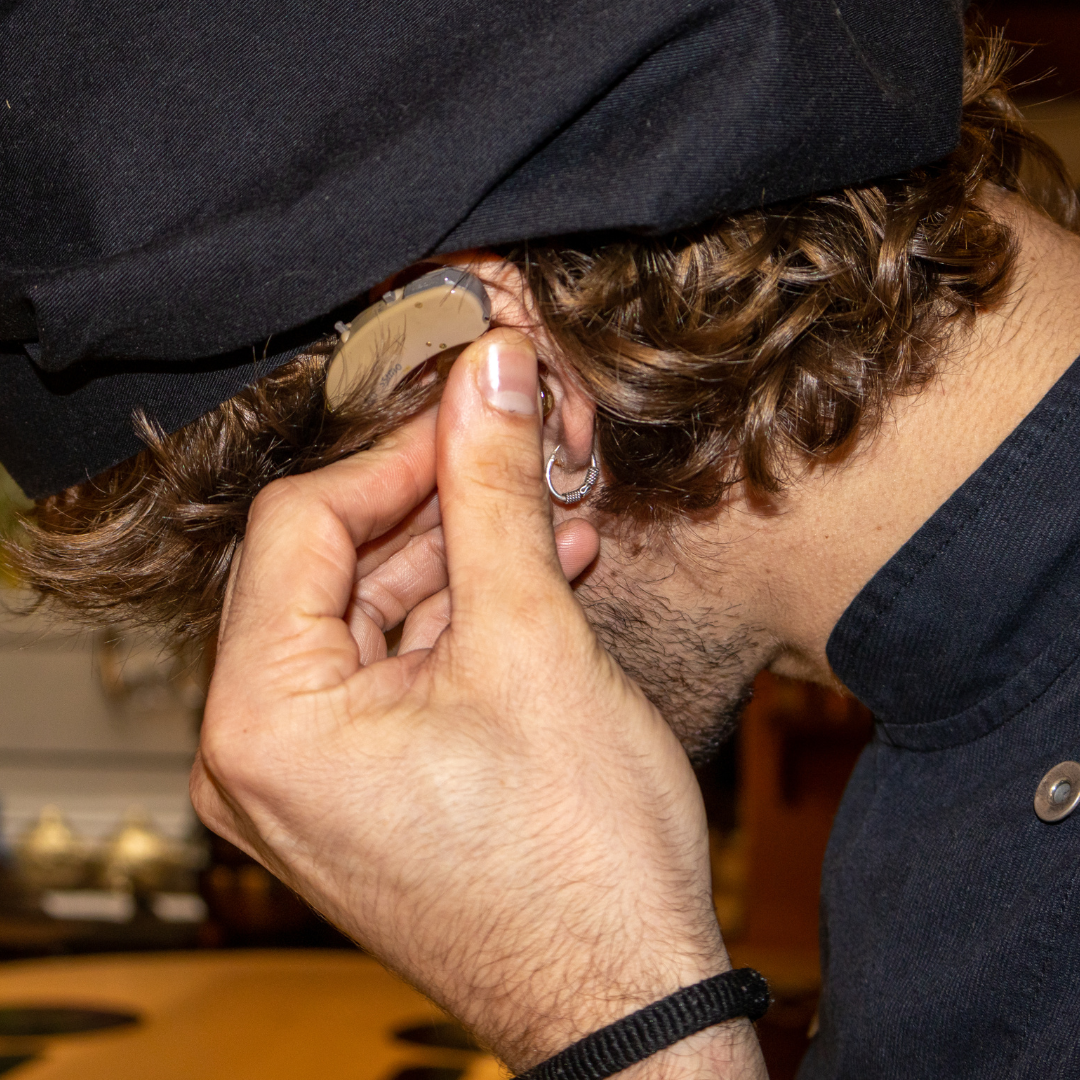
Maintaining dinner dialogue proves demanding when chaotic ambient noise strains your concentration and hearing. Our specialists can evaluate hearing under both calm and noisy listening conditions to establish why noisy rooms present such difficulty. Once the diagnostic etiology of your difficult hearing is established, we implement personalized clinical and technological strategies.
Why Everyday Hearing Fails in Busy, Noisy Restaurants
A tranquil environment produces a beneficial signal-to-noise ratio where spoken dialogue easily overpowers weak ambient noise. Busy dining establishments generate the exact reverse scenario. Overlapping chatter, piped music, kitchen clatter, and hard-surface reverberation mask speech, forcing the brain to expend immense cognitive effort to track conversation.
Such listening challenges typically stem from high-frequency hearing loss, auditory-processing deficits, or accumulated noise-induced trauma. Cognitive exhaustion, physical fatigue, low ambient lighting, and increased distance from your conversational partner further compound the challenge. Some patients pass standard pure-tone evaluations with normal scores yet exhibit substantial impairment during specialized speech-in-noise testing. Difficulty in restaurants deserves evaluation even when everyday hearing seems normal.
Clinical Evaluation of High-Frequency Hearing Loss
We begin by reviewing your history of communication difficulties, prior noise exposures, ringing or tinnitus, pharmaceuticals, and unilateral symptoms.
Pure-tone audiometric evaluations measure the absolute quietest sounds audible across specific octave frequencies using air and bone conduction. Patients with high-frequency hearing loss typically exhibit a sloping audiogram configuration where sensitivity steadily declines at elevated pitches. Additional testing may include tympanometry to assess middle-ear function and word-recognition testing to measure speech understanding.
A quiet sound booth cannot replicate complex dining room acoustics, which makes clinical speech-in-noise testing especially informative. This diagnostic protocol measures your capacity to understand target words or sentences against progressively louder multi-talker babble. Combined, these clinical findings determine whether your symptoms stem from acoustic audibility, word clarity, central noise filtering, or multifactorial causes.
Understanding Auditory Processing Disorders in Noisy Environments
An auditory processing disorder compromises how the central auditory pathways and brain decode incoming acoustic information. The ears may detect tones at expected levels, but the brain may have difficulty organizing competing signals, distinguishing similar speech sounds, or following rapid conversation. We first evaluate peripheral hearing and then determine whether an individualized auditory-processing test battery or referrals to other professionals are appropriate.
How to Improve Speech Clarity in Challenging Acoustic Environments
Simple situational adjustments enhance the speech signal entering your ears and offer clearer facial cues. Before heading out to eat, select dining spots with quieter acoustic profiles or dine during low-volume hours. Venues with booths, acoustic panels, curtains, carpeting, and other sound-absorbing features may be easier than open rooms filled with hard surfaces.
Upon entering the restaurant:
- Ask for seating positioned far away from open kitchens, noisy bar areas, ceiling speakers, and large parties.
- Position yourself with your back toward a solid partition to dampen intrusive background noise from behind.
- Face your speaking partners directly in well-illuminated seating to maximize visual speech cues.
- Minimize the physical gap separating you and the person speaking as much as reasonably possible.
- Place your better-hearing ear toward the person you most want to hear.
- Prompt companions to rephrase unclear sentences with alternate terminology instead of repeating identical words.
- Actively confirm key information rather than smiling and guessing at ambiguous dialogue.
- Step away for a brief auditory rest when cognitive listening fatigue begins to set in.
- Request that dining partners articulate words distinctly at an unhurried, natural speed.
- Raised or shouting voices warp acoustic phonetics and rarely improve speech intelligibility.
Modern Audiological Tools for Managing Background Noise
Determining the proper hearing technology hinges on the underlying disorder, everyday listening environments, and whether peripheral hearing loss is diagnosed. Modern clinical hearing aids integrate directional microphone polar patterns, automated digital noise suppression, and personalized restaurant memory settings to highlight frontal speech and reduce background competition. Realistic expectations are vital, since even advanced hearing devices cannot completely erase background conversational chatter.
A remote microphone can provide a stronger improvement in the signal-to-noise ratio. Worn on the speaker’s collar or set on the table, the microphone broadcasts direct audio to paired hearing aids or specialized receivers. This targeted setup effectively neutralizes the negative impacts of room distance and interfering background noise.
Other clinically valuable tools include:
- Table microphones for small-group conversations
- Telecoil components connecting directly to public hearing-loop systems
- Smartphone speech-to-text or live-captioning applications
- Advanced hearables incorporating assistive directional listening programs
- Decibel-monitoring apps and crowd-sourced dining platforms that track restaurant noise
Our audiology staff helps you evaluate options, ensures wireless compatibility, and trains you on operating your chosen equipment.
How Can a Doctor Help with Hearing in Loud Places?
A professional clinical assessment moves beyond basic baseline statements like “I hear fine in quiet rooms.” We examine the challenging acoustic venues, conversational setups, and noise profiles you encounter to select appropriate diagnostic tests. Clinical evaluation commonly integrates pure-tone audiometric testing, middle-ear analysis, word recognition, and speech-in-noise measures. Central auditory-processing testing is considered whenever clinical intake and initial test outcomes point toward higher-order deficits.
Sudden unilateral hearing drops, acute asymmetric changes, or rapid auditory decline mandate evaluation by an ear, nose, and throat physician. Individualized diagnostic care pinpoints the precise physiological etiology rather than merely blaming restaurant noise for communication struggles.
Schedule a Hearing Evaluation Today
If restaurant conversations leave you guessing, withdrawing, or feeling exhausted, schedule a comprehensive hearing evaluation with us. We provide proven treatments to enhance your hearing in noisy environments, offering hearing aid fine-tuning, specialized assistive accessories, and individualized auditory therapy.
Contact our audiology office today to schedule your evaluation and move toward effortless, confident conversations.