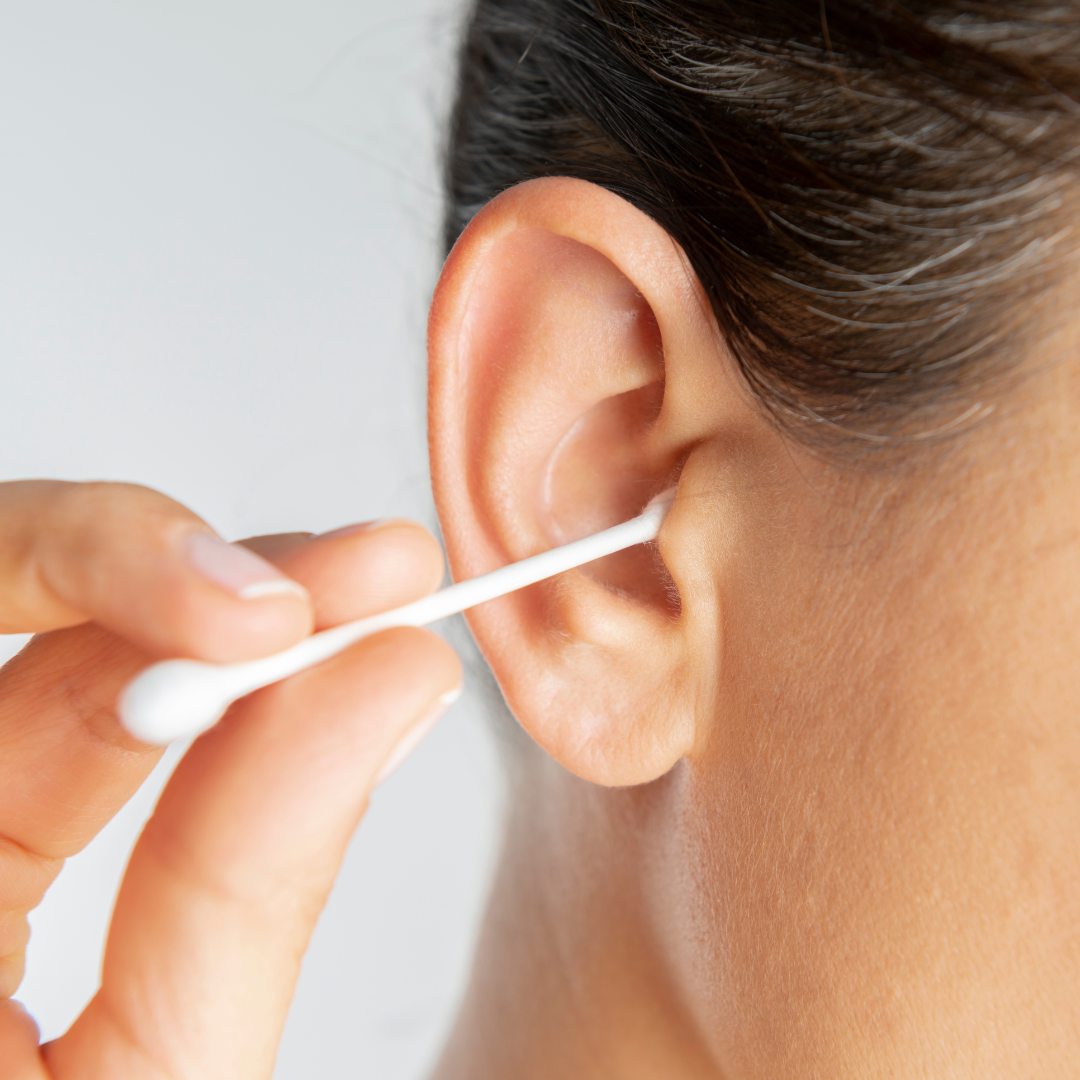
Even though cotton swabs seem practical for routine hygiene, probing the inner canal creates deeper impactions and threatens long-term ear health. We can determine whether earwax actually needs removal and recommend a method suited to your ear health. Most ears do not mandate routine physical scrubbing; yet, if accumulation occurs, we guide patients through safe cerumen management.
Why Are Q-Tips Bad for Your Ears?
In audiology, earwax (cerumen) is recognized as a vital protective substance rather than dirt. Cerumen works to entrap airborne particles, deter infectious pathogens, hydrate the auditory canal, and protect thin dermal layers. Standard jaw mechanics and lateral skin shedding propel oxidized wax toward the outer meatus, allowing it to dry and wash away during daily washing.
Introducing a cotton swab into the ear pathway severely disrupts the ear’s organic cleaning process. While you may see a tiny amount of wax on the swab, the device generally shoves the rest deeper toward the eardrum. Repeated use can pack wax into a firm blockage and create the plugged sensation that encourages even more cleaning.
You may gently utilize cotton swabs across the external auricle, but you should avoid inserting them into the internal canal.
How Cotton Swabs Cause Physical Trauma to the Ear
The epithelial surface inside the ear canal remains exceptionally fragile and easily abraded. Microscopic tears cause acute discomfort or hemorrhage while exposing tissue to bacteria, which heightens the probability of an outer ear infection. In addition, the cotton head can loosen and become retained as an obstructing foreign object in the ear.
Swab-related clinical injuries include:
- Cerumen forced into dense canal impaction
- Cutaneous tearing, swelling, canal inflammation, or bleeding
- Acute otitis externa or canal infection
- Retained cotton tip or foreign object obstruction
- A torn or perforated eardrum
- Trauma inflicted on the ossicular chain behind the eardrum
- Sudden alterations in auditory acuity or permanent hearing changes
- Distressing tinnitus, secondary dizziness, or debilitating ear pain
Serious injuries are uncommon, but they can happen if someone bumps the user’s arm, the swab slips, or it is inserted too far.
Recommended Schedules and Timelines for Cerumen Removal
Most individuals do not need to perform earwax maintenance on a calendar schedule. Physiologically stable ears continuously migrate wax outward, while standard showering takes care of the visible ear. Overcleaning can dry or irritate the canal and may increase the likelihood of infection or impaction.
Intervention becomes necessary whenever wax creates an anatomical blockage, obstructs otoscopic examination, disrupts hearing aid operation, or causes aural distress.
Safe and Approved Home Techniques for Earwax Care
If earwax produces no discomfort or auditory decline, leaving it undisturbed is consistently the safest choice. Restrict hygiene to wiping the outer ear folds with a damp cloth while permitting the canal to self-evacuate.
Should cerumen require breakdown, our team may recommend commercial cerumen-removal drops or formulas featuring saline, mineral oil, glycerin, or carbamide peroxide. Use only the labeled amount and for the labeled duration. Cease use at once if you experience localized pain, acute vertigo, cutaneous rash, or intensifying discomfort.
Performing home ear irrigation carries distinct risks and requires prior professional evaluation and hands-on technique instructions. Never utilize motorized oral irrigators or dental water devices in the ear canal. Steer clear of dangerous tools such as ear candles, metal curettes, lighted camera tools, bobby pins, and home vacuum devices. Such unregulated implements can cause thermal burns, canal lacerations, eardrum perforations, or deeper cerumen impactions.
Indications for Scheduling a Professional Ear Cleaning
Make an appointment when the ear remains obstructed after using softening drops, wax is tightly packed, or home methods prove unsuccessful. Professional removal is also preferable when a person cannot safely hold still, has a narrow ear canal, uses hearing aids, or has medical or surgical factors that make drops or irrigation risky.
You should seek professional assessment for:
- Sharp ear pain, chronic itching sensations, or localized tenderness
- Otorrhea containing blood, active pus, serous fluid, or an unpleasant odor
- Systemic fever spikes or acute swelling near the external ear
- Sudden-onset tinnitus or vestibular dizziness
- Hearing loss that starts abruptly or fails to resolve following wax removal
- Concern regarding a perforated eardrum or foreign cotton debris
- Frequent wax buildup that occludes or damages hearing aids
Sudden drops in hearing in a single ear require emergency medical attention rather than casual attribution to earwax. Early hearing testing easily separates a physical wax impaction from a critical inner ear condition.
In-Office Procedures for Clearing Earwax Blockages
Our clinical team begins by evaluating the ear canal using an otoscope or binocular microscope to confirm cerumen impaction and inspect for infection, trauma, or tympanic membrane perforations. The ideal extraction strategy is dictated by the consistency of the wax, ear canal dimensions, clinical background, past ear procedures, and patient physical stability.
Expert removal procedures include:
- Wax-softening drops before or during the appointment
- Regulated mechanical irrigation with body-temperature saline for sealed eardrums
- Controlled vacuum micro-suction under continuous visual monitoring
- Manual removal with a loop, curette, or small forceps
Visual guidance empowers the clinician to protect delicate canal skin and pause immediately if sensitivity is detected. Utilizing more than one removal technique may be necessary to resolve dry or severely compacted wax. Following cerumen extraction, a complete post-procedure examination verifies that the canal epithelium and tympanic membrane are intact. If fullness, tinnitus, dizziness, or hearing difficulty continues, additional testing can identify another cause.
Contact Us for Safe Professional Earwax Removal
When your ears feel plugged or you notice auditory changes, schedule an appointment with our specialists instead of grabbing a cotton swab. Your clinical visit will cover a comprehensive review of symptoms, otologic surgical history, hearing aid utilization, home care efforts, and metabolic contributors to wax buildup. Connect with our practice today to reserve an appointment for safe, professional earwax removal.